Why Emotional Intelligence (EI) Matters in Interviews
In healthcare, especially at the advanced practice level, emotional intelligence isn’t optional. It’s essential.
That’s why interview committees often test for emotional intelligence indirectly through questions about:
Handling difficult patients
Managing team dynamics
Responding to mistakes or feedback
Facing ethical dilemmas or pressure
They’re not just looking for clinical knowledge; they’re looking for maturity, self-awareness, and empathy. Your ability to reflect, regulate, and respond makes you not only a strong applicant but a future leader in your field.
The Emotional Intelligence Framework for Interviews
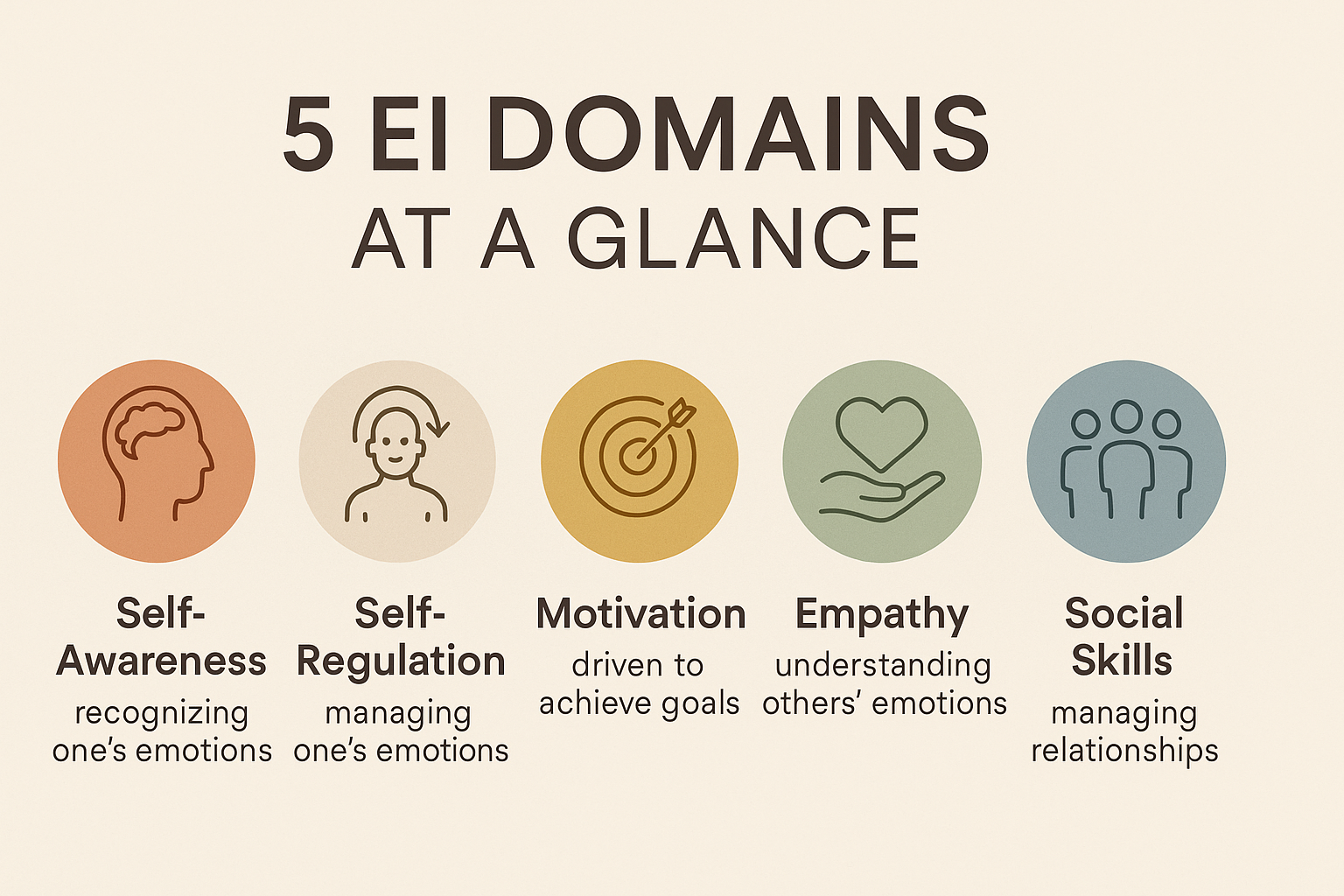
Here’s a simple but powerful 4-part framework to help guide your answers to emotionally complex questions:
1. Self-Awareness
Recognizing your emotional responses in stressful or conflict-based scenarios
Example phrases:
“I realized I was starting to feel defensive, so I paused before responding…”
“I noticed my tone shifting and reminded myself to stay focused on the patient…”
2. Empathy
Understanding others’ emotions and perspectives — not just reacting
-
Example phrases:
“I could tell the family was overwhelmed, so I made time to answer every question clearly…”
“I put myself in the patient’s shoes and adjusted my approach to meet them where they were…”"I remembered how scared I was to hear my grandfather had a stroke so wanted to make sure the family felt heard..."
3. Emotional Regulation
Managing your emotions to maintain professionalism
Example phrases:
“Even though I was frustrated, I made a conscious effort to keep my tone respectful…”
“I focused on breathing and redirecting the conversation to avoid escalating tension…”
4. Intentional Response
Responding, not reacting — guided by values and patient-centered goals
Example phrases:
“Rather than defending myself, I acknowledged the feedback and asked how I could improve…”
“I chose to reframe the moment as a learning opportunity for the team…”
Applying EI in Common Interview Question Types
➤ Conflict Scenarios
Interview Question: “Tell me about a time you had a disagreement with a coworker.”
Strong Answer Approach:
Describe the situation with neutrality — don’t vent.
Focus on how you listened, regulated your reaction, and worked toward resolution.
Reflect on what you learned about yourself and how you grew.
➤ Failure or Mistake Scenarios
Interview Question: “Talk about a time you made a mistake in patient care.”
Strong Answer Approach:
Own the mistake with humility.
Explain your emotional response and how you managed it.
Highlight the steps you took to prevent it from happening again.
Show growth, not perfection.
➤ Teamwork Questions
Interview Question: “Describe a time you worked as part of a team.”
Strong Answer Approach:
Emphasize empathy and listening as key team skills.
Mention how you adapted your communication style.
Reflect on the group dynamic and how emotional intelligence improved collaboration.
Pro Tip: EI Answers Should Feel Honest, Not Scripted
Don’t be afraid to show vulnerability and try to make sure it ends with reflection and growth. Emotional intelligence is not about having no emotions; it’s about knowing how to recognize, manage, and channel them appropriately.