Types of CRNA Interviews: What to Expect and How to Prepare
Your interview could take many forms with each designed to test your readiness in a slightly different way. Knowing what to expect is half the battle. In this guide, we’ll break down the most common interview formats and how to strategically prepare for each.
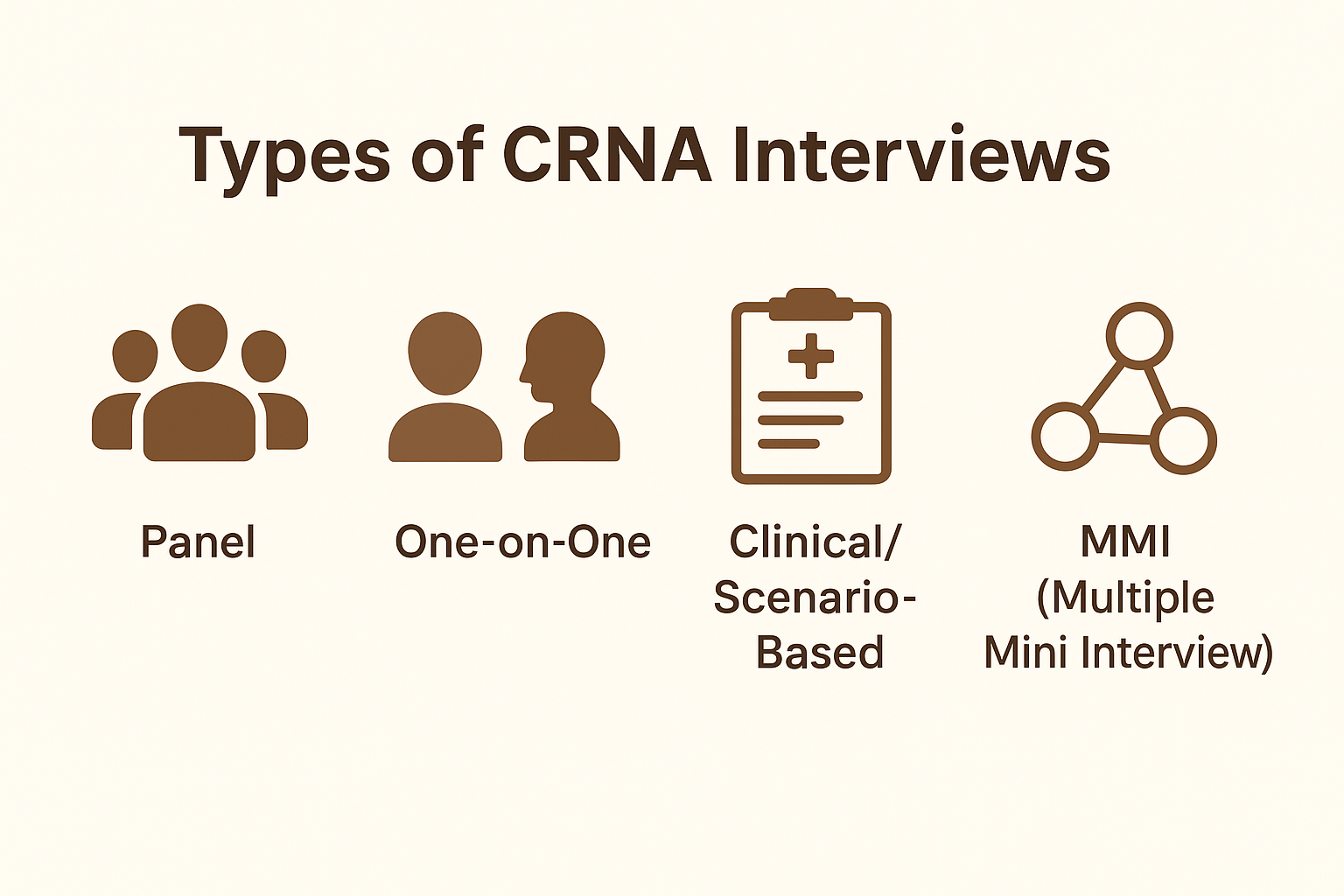
1. Panel Interviews
What it is: A group of faculty members, CRNAs, or admissions staff ask you questions—sometimes rapid-fire, sometimes conversational.
What they’re looking for: Your ability to think on your feet, respond confidently under pressure, and communicate clearly with multiple people at once.
Tips:
Make eye contact with each panelist, even when responding to one.
Practice calm, steady responses. Avoid rambling.
Prepare for both clinical and personal questions.
2. One-on-One Interviews
What it is: You’ll meet with an individual faculty member or clinician for a focused conversation.
What they’re looking for: Depth of thought, personal motivation, and clarity in communication.
Tips:
Be authentic as this is your chance to connect.
Have your “Why CRNA” story polished and ready.
Keep answers focused and personal without oversharing.
3. Virtual Interviews
What it is: Conducted over Zoom or a similar platform, especially for out-of-state applicants or in early screening rounds.
What they’re looking for: The same qualities as in-person interviews, but with added emphasis on professionalism in a virtual space.
Tips:
Test your tech. Lighting, sound, and background should all be interview-ready.
Practice answering questions on camera.
Minimize distractions
It's hard to maintain eye contact over virtual spaces so we recommend at least having the camera pointed directly at your face and closer to eye level, if possible.
4. Multiple Mini Interviews (MMI)
What it is: A series of short, timed interview stations focused on different scenarios like ethical dilemmas, teamwork, or communication challenges.
What they’re looking for: Critical thinking, ethical reasoning, interpersonal skills.
Tips:
Practice responding under timed conditions.
Think aloud clearly and structure your thoughts logically.
Stay calm and flexible—it’s not necessarily about “right answers,” but about how you think.
Final Thoughts
Each interview format tests different aspects of your readiness to enter a rigorous CRNA program. The key is to prepare strategically, stay composed, and show up as your best self.
And, remember, this is a good time for your to get an idea what you may think or feel about the program and if it is a good fit for you!